Everybody wants to see a ghost, don’t they?
ears ago I asked Opa, one of my Guides in Spirit, “How come I don’t see ghosts? Everybody else seems to see ghosts.”
His answer made me laugh.
“Because you’re expecting Casper the Friendly Ghost.”
Opa explained that when I see people in Spirit, they often look completely real to me. Nobody stuck inside a white quilt cover with a couple of holes cut out for their eyes. No transparent bodies. Just people.
So for the next couple of weeks I found myself walking around shopping centres wondering who was alive and who wasn’t — even deliberately getting close enough to people to reassure myself they were solid.
It sounds ridiculous, but it also explained several experiences I’d had over the years.
Perhaps I had been seeing ghosts all along. I just didn’t realise it.
Goolwa was part of my childhood
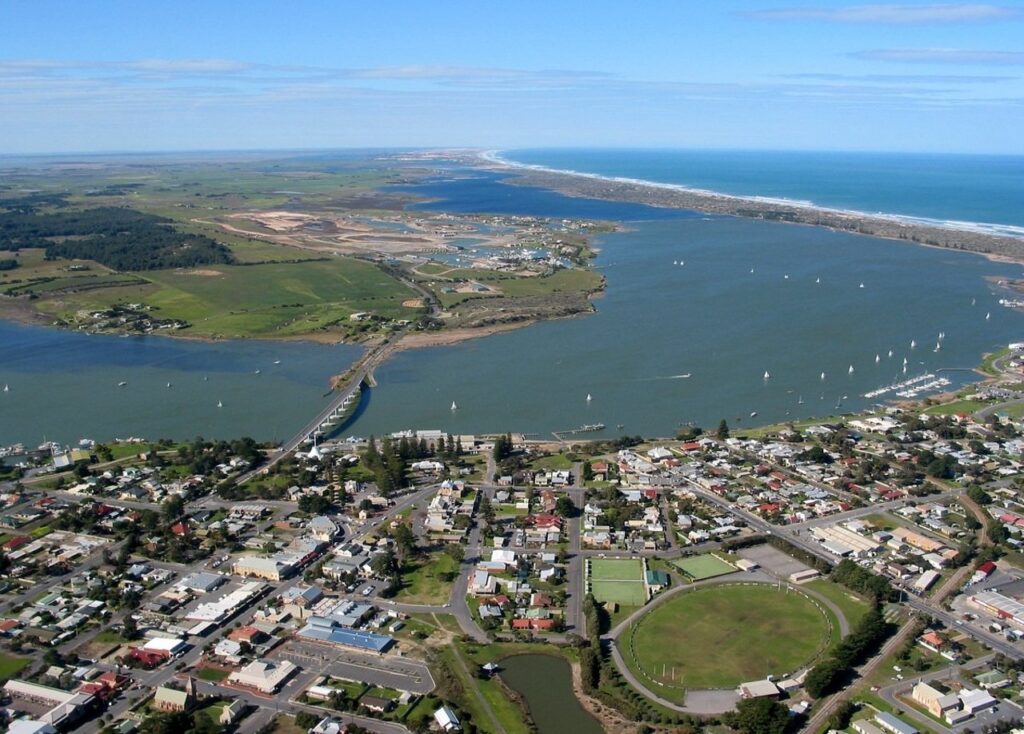
Goolwa had been part of my life since I was a child. I grew up at Clayton Bay, not far away, and had been going to Goolwa from about the age of nine.
When I was around twelve, Dad bought me my first catamaran and most weekends I would sail from Clayton Bay to Goolwa — about an hour and a half each way.
Years later, in 2015, I returned to South Australia after almost 27 years in Perth to help care for Mum and Dad. Coming back to the area was incredibly nostalgic.
How I ended up at Alex FM
Dad used to listen to Alex FM, the local community radio station, and kept telling me I should go in and meet them. Eventually I did, and that’s how I met Lynn.
Lynn interviewed me, and before long we created a regular radio segment called Blast from the Passed — “passed” because, of course, we were talking about Spirit.
That connection eventually led to Lynn inviting me to help with the annual Goolwa Historic Ghost Walk, alongside Mal and the other Alex FM volunteers.
A ghost walk through historic Goolwa
Goolwa has a wonderful old-world atmosphere, and its history made it the perfect setting for a ghost walk. It became an important river port in the 1800s, with paddle steamers, barges, the old wharf and the early railway all playing a part in the town’s story.
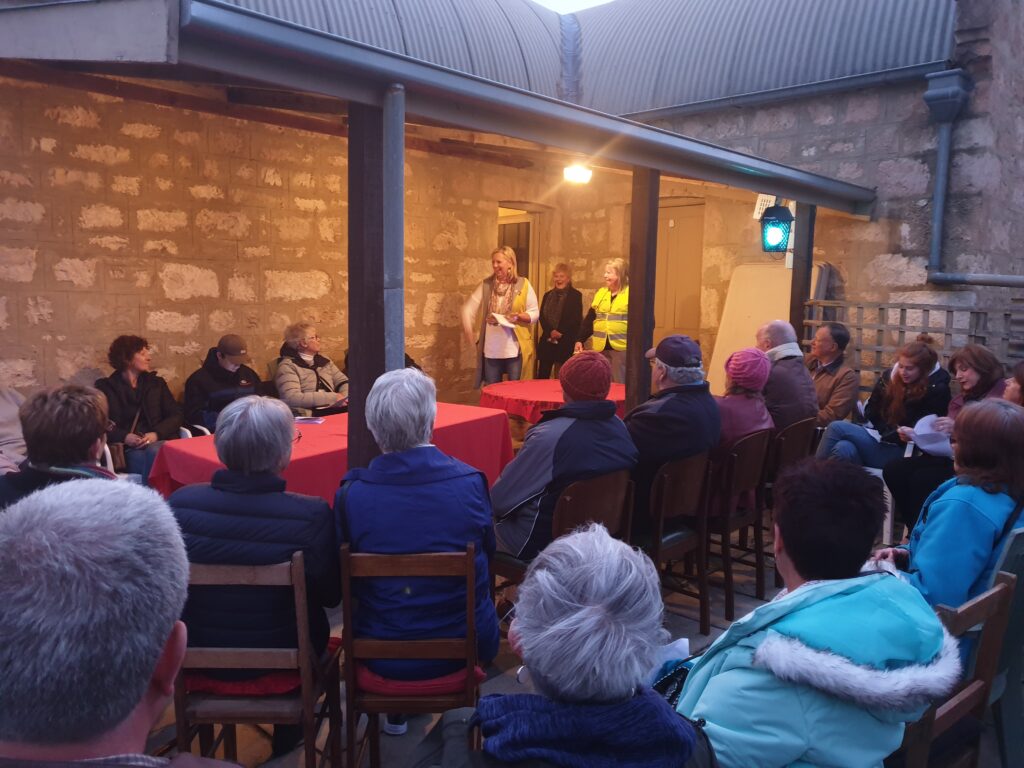
Our ghost walks usually attracted around 35 to 40 people. There were candles, plenty of spooky atmosphere, a good dose of local history and, of course, the stories nobody could quite explain.
We encouraged people to photograph everything — especially windows. Quite often, someone would look back through their photos later and find something they hadn’t noticed at the time.
View the full Goolwa Ghost Walk photo gallery
Strange things happening at Alex FM
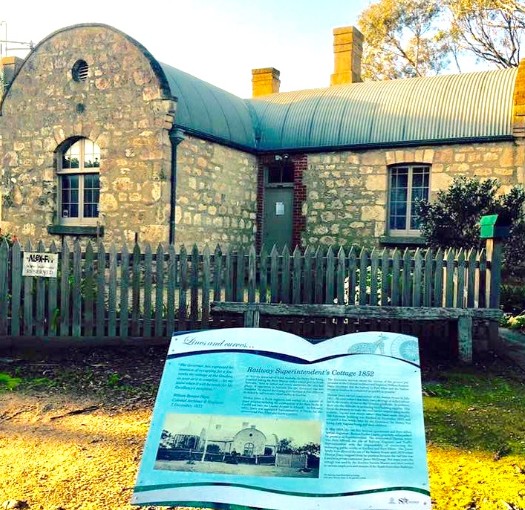
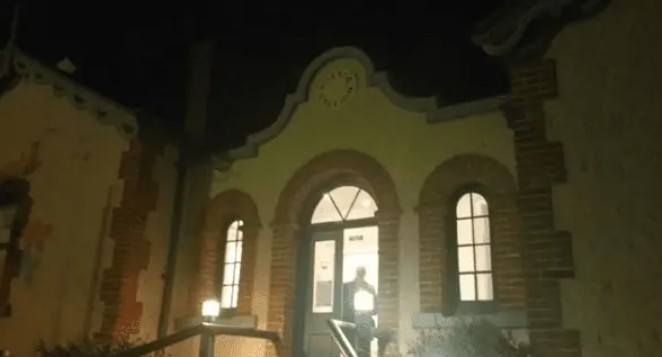
Alex FM itself had its own stories. The station operated from the old Railway Superintendent’s Cottage, and there was one particular spot outside that I simply could not go near — an old well.
I didn’t know anything about it at the time. Lynn later told me a local story that a man had thrown his wife into the well. I have never been able to verify that historically, so I can only tell it as it was told to me.
Inside the building there were other odd moments too. Rooms would sometimes become unusually cold, and staff talked about a ghost that seemed to move through the building. Whether there was a perfectly ordinary explanation or not, it certainly added to the atmosphere.
Down by the old wharf
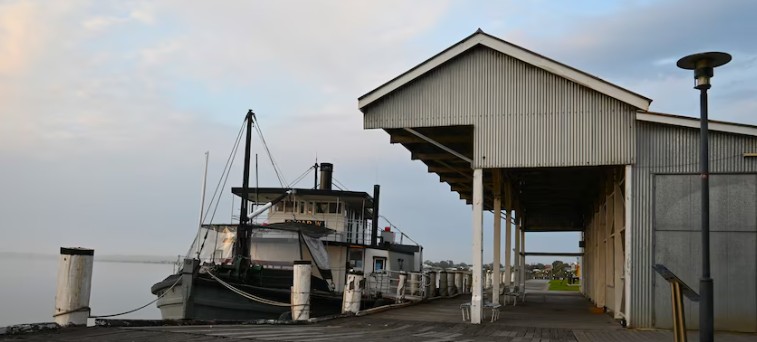
The old wharf was one of the most atmospheric parts of the walk. Goolwa had become an important river port, with paddle steamers travelling down the Murray and goods being unloaded and transferred through the town.
One of the more colourful stories we used to tell was that when the boats were getting close, the sailors would burn wet wood, creating a very distinctive green smoke. According to local folklore, some of the working girls in town knew exactly what that smoke meant — the boats, and the sailors, were on their way.
I have always loved stories like that. They may not all be neatly documented in a history book, but they give you a glimpse of the people, humour and character of the town.
Plodder the Policeman’s Horse, the old stables and the RSL
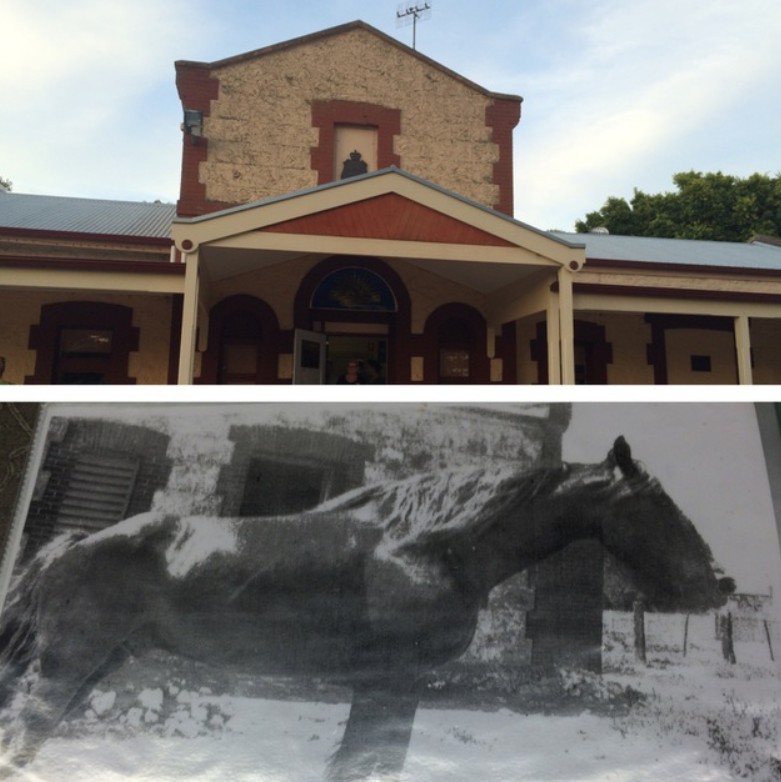
Another stop on the walk was the old RSL building, which had links to Goolwa’s early horse, railway and stable history.
One of the stories we told involved a horse called Plodder. What always interested me was that people would sometimes say they could smell hay, or even a horse, before we had told them anything about the history of the place.
There was also an old upper storage area reached by wooden stairs, which only added to the feeling that the building still held plenty of stories of its own.
The Australasian Hotel and a rather grim history
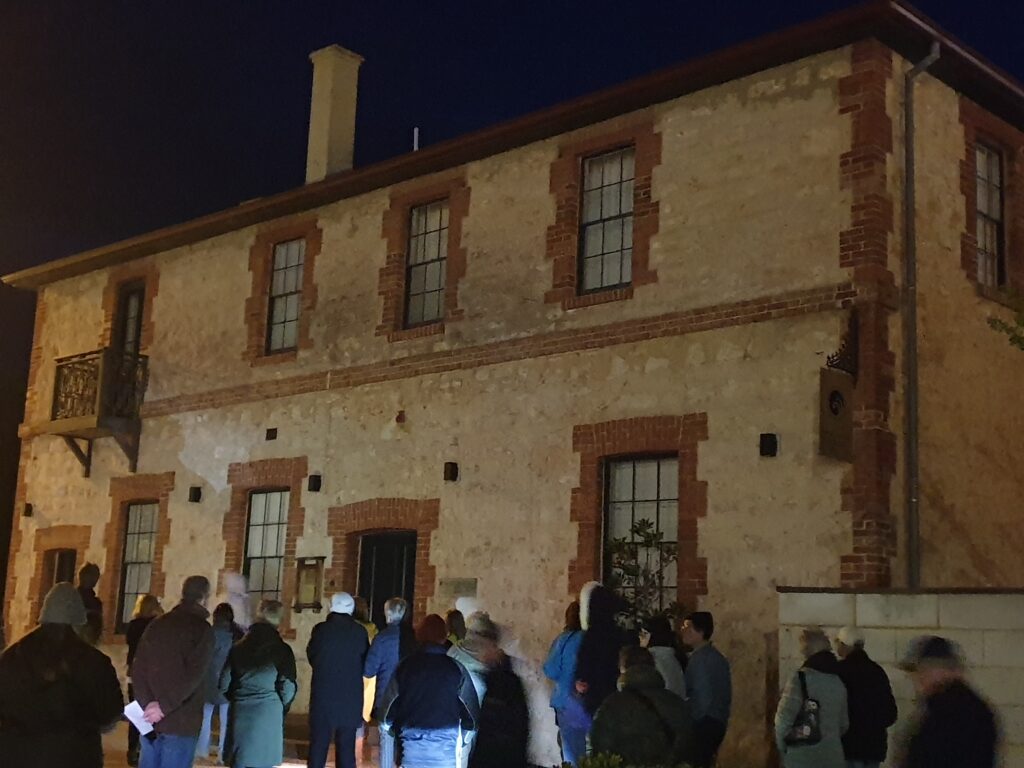
The Australasian Hotel was another memorable stop. Dating back to the late 1850s, it had a long history and plenty of stories attached to it.
One of the more unsettling pieces of local history was that, before Goolwa had its own morgue, bodies were sometimes stored in hotel cellars. As you can imagine, people were not particularly thrilled about eating and drinking upstairs while the deceased were being kept below.
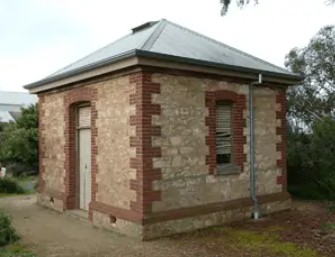
The Goolwa Morgue was eventually built in 1883.
During the ghost walks, people were encouraged to photograph the upper windows of the hotel. I remember several people later showing me photographs they believed showed a woman in old-fashioned clothing standing at one of the windows. I can’t tell you what was actually in those photographs, only that the people who took them were certainly surprised by what they saw.
Little Scotland and the old maternity hospital
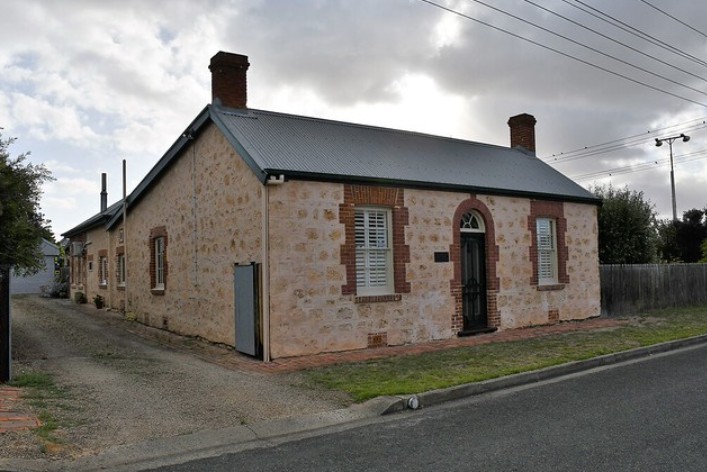
Little Scotland was another beautiful part of the walk, with its historic cottages and links to Goolwa’s early Scottish and river-trade history. It was one of those places where the buildings themselves seemed to hold onto the past.
Not far away was an old property that had later been used as a private maternity hospital. One of the stories attached to the property involved a man who had died in a shed there.
Years later, a mother and her young son — he was about eight — were walking past when he pointed to the shed and said:
“See that shed there? That’s where I died.”
The mother later asked about the property and was told the story of the man who had died there.
What made it even stranger for me was what happened much later. I was telling the story to my hairdresser in Victor Harbor when she suddenly said the mother was her best friend. She remembered being told exactly what the little boy had said.
I asked whether her friend’s son, now grown up, might ever talk to me about it, but nothing came of it.
I still don’t know what to make of that story. I only know that it stayed with me.
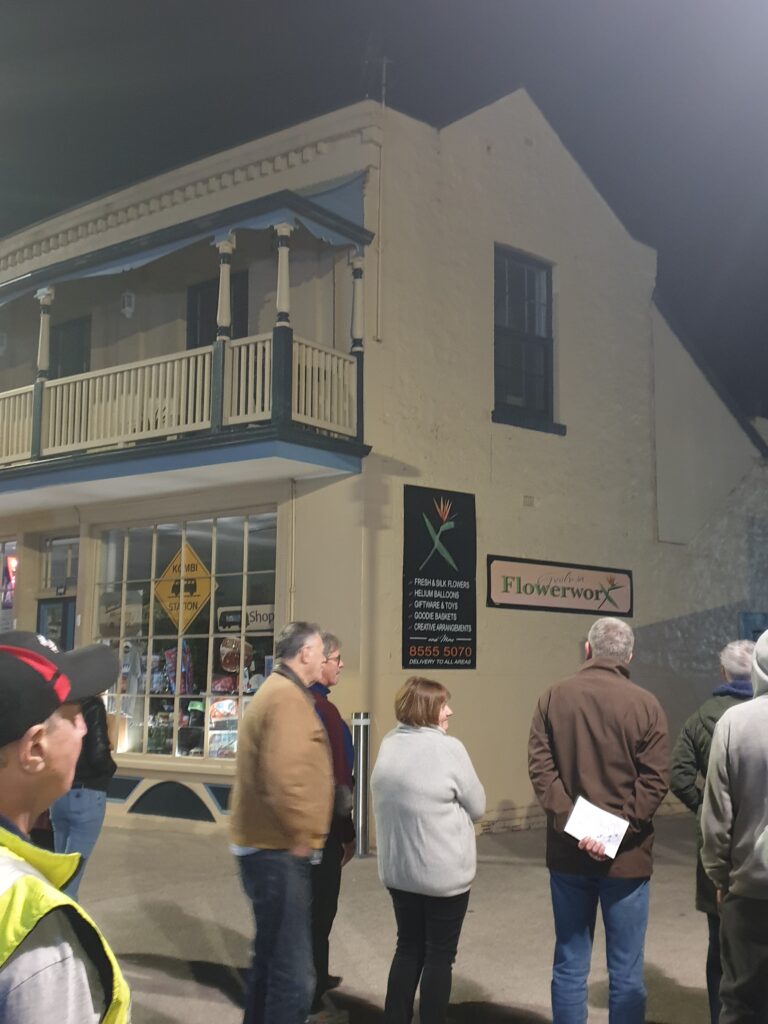
The woman and child in the upstairs window
There was also a distinctive old bow-fronted shop in Goolwa where people repeatedly told us they had photographed a woman and child in an upstairs window.
Eventually I arranged to go into the room myself during daylight.
I could feel a presence there, and my own spiritual impression was of a woman and child who had been abandoned by a sailor. I felt very strongly that she loved Goolwa and simply did not want to leave.
I can’t present that as documented history — it was simply what I personally picked up in the room. But it made the photographs people had shown me all the more intriguing.
Things even the hotel staff couldn’t explain
Over the years, friends who worked in some of Goolwa’s historic hotels told me about things they couldn’t explain.
One story involved a toilet cubicle that was locked from the inside, even though nobody was there. Then the toilet paper began unrolling by itself.
Others spoke about hearing footsteps upstairs when they knew the upper floor was empty.
I wasn’t there when these things happened, so I can only share them as the personal accounts of people I knew. But they were certainly enough to make the old buildings feel even more atmospheric.
The Corio Hotel, the Goolwa Hotel and one woman who got more than she bargained for
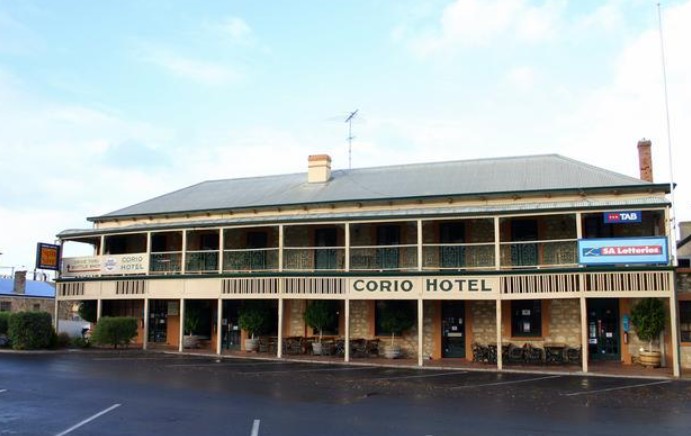
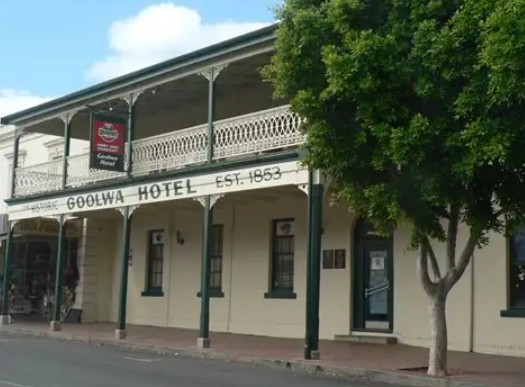
he Corio Hotel and the Goolwa Hotel were both part of the walk, each with their own history and stories.
On one tour, I had invited a friend to present some of the historical information so I could concentrate more on the ghostly side of things. We had a group of around 40 people gathered outside the Goolwa Hotel when six women were sitting nearby having a drink.
One of them announced:
“I don’t believe in that rubbish. The only spirits I like are the ones in the bar.”
A little later she got up, bumped straight into me and apologised.
I looked at her and said:
“Ooh… can you see me?”
The poor woman nearly jumped out of her skin. For a moment, she genuinely thought I was a ghost.
I quickly told her:
“No, no, no, it’s okay, I’m real. You can touch me.”
I still laugh when I think about it.
Unexplained goings on at the Goolwa Courthouse and Police Station
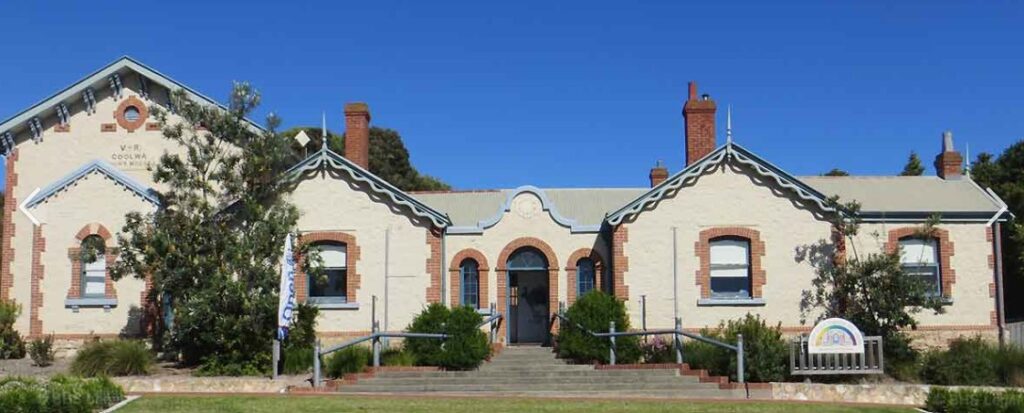
The old Courthouse was always one of the most entertaining stops on the walk. Volunteers would dress in period clothing and stage mock trials while everyone sat in the courtroom. People loved it.
But the building also gave me one of those strange personal reactions I couldn’t explain.
The first time I went inside, there was one particular area of the room I simply could not stand in. I moved away from it without knowing why.
Later, Lynn told me a story connected with violence and a death involving someone who had appeared for trial and a policeman. I have never been able to verify the exact historical details, so I don’t present that as fact.
What I do remember very clearly is how strongly I reacted to that particular spot before I had been told anything about it.
Orbs, blue lights and photographs nobody expected
We actually encouraged people to take photographs throughout the ghost walk. Quite often, people couldn’t see anything unusual with the naked eye, but when they looked back through their cameras later, they would find strange shapes, figures or what appeared to be people standing in windows.
But the blue lights were different.
On this particular occasion, everyone could see them with the naked eye. They were very clear, they moved, and people were photographing them at the same time.
We kept a close eye on the group and there was no one waving a penlight torch around or doing anything obvious that could explain what we were seeing.
I still don’t claim to know what those blue lights were.
But I do know we could see them, we watched them move, and the cameras captured them too.
It was one of those genuine “Wow… what on earth is that?” moments that made the ghost walks so much fun.
See more photographs from the Goolwa Ghost Walk
South Australia’s First Morgue — Ghosts Are Just Us Dead
The morgue was always one of the highlights of the ghost walk. Most people don’t get the opportunity to walk inside an old morgue — and, to be fair, plenty of people don’t particularly want to.
Some people simply could not bring themselves to go inside. Others couldn’t even stand close to the building. I always found that fascinating because I never found the morgue particularly frightening or unsettling.
At the beginning and end of the tours, I would remind people of something I have believed for a very long time:
Ghosts are just us — dead.
We have a Soul now, and we still have a Soul when we die. The biggest difference is that right now we have a body.
I sometimes explain it like driving a car. We get into a car because we need it to take us somewhere, and when we arrive, we get out. I see life much the same way. We get into a body to travel through this life, and when that journey is finished, we get out.
The body, of course, still has to be dealt with somewhere — and that was what made the morgue so interesting to me. I have never been particularly frightened of death. I have sat with and helped people who were passing away, so being inside an old morgue felt more fascinating than frightening.
That didn’t mean strange things didn’t happen.
We would light candles inside before people entered, and occasionally a candle would suddenly go out when there was no noticeable breeze and no obvious reason for it.
Was it Spirit? I can’t tell you that.
But I do think Spirit likes to keep us guessing occasionally.
In fact, when I die, I fully intend to have some fun with it. I’ll probably tap somebody on the shoulder and go:
“Boo!”
They won’t be able to see me.
But I’ll be able to see them — and I’ll be laughing.
So, have you ever seen a ghost?
I have been on ghost tours in other places, including Salem in the United States and Sydney, and quite often I have seen or felt very little.
Maybe that is why Opa’s comment about me expecting Casper the Friendly Ghost has stayed with me for so many years.
The truth is, I think an enormous number of people have had something happen that they couldn’t quite explain. A figure at the end of the bed. Footsteps when nobody else was home. A movement from the corner of your eye. A photograph with somebody — or something — in it that you know wasn’t there when you took it.
My first response isn’t fear. If I sense someone in Spirit, I can simply acknowledge them. Sometimes I will speak to them in my mind. After all, as I said earlier, ghosts are just us — dead.
The Goolwa ghost walks gave people permission to be curious. To laugh, to wonder, to be a little bit scared and, every now and then, to experience something that left them saying, “What on earth was that?”
I will always be grateful to Alex FM, Lynn, Mal and all the volunteers who helped make those nights so much fun and gave me the opportunity to be part of them. If you ever find yourself down on the magnificent Fleurieu Peninsula in South Australia, please be sure to do a Ghost/History Tour with Alex FM or pop into the Information Centre and they will give you your very own self-guided walk.
And if you have ever had your own ghostly experience, I would love to hear about it.
We started with the question:
Everybody wants to see a ghost, don’t they?
Perhaps the real question isn’t whether you have ever seen one.
Perhaps it is whether you realised who you were looking at.

Continue Your Spiritual Journey
If this story has left you wondering about Spirit, signs, intuition or your own experiences, you may enjoy exploring more of my work.
View the full Goolwa Ghost Walk photo gallery
Explore Practical Spirituality
Psychic & Spiritual Readings with Marion